From captured calls to inspectable drift evidence.
Follow the path from trace capture to rubric calibration, like-for-like comparison, and a persisted signal a reviewer can investigate.
1 minute 12 seconds · captions included · no autoplay
Measure the behavior that matters for one workload.
Verdict focuses on the LLM-call layer: start with trace evidence, define an explicit rubric, test the judge against human labels, then compare recent behavior with a reference window. This demo illustrates Verdict's supported capture path.
-
01
Start with trace evidence
Use an existing Verdict-compatible store, or keep your normal Anthropic, OpenAI, or Google SDK path and let Verdict record operational metadata locally without putting a proxy in front of your traffic.
-
02
Define what “good” means
Use PASS/FAIL dimensions that belong to your workload, then label a representative sample before asking a model to judge it.
-
03
Calibrate before trusting
Measure whether the chosen judge agrees with your experts. A generic benchmark or an impressive point estimate is not treated as proof for your application.
-
04
Compare like with like
Group comparable prompts and emit a drift signal only when configured statistical and practical effect-size gates are met.
Quality, cost, latency, and errors from the same evidence.
Each view stays tied to captured traces and persisted evaluation evidence, so a signal can lead to an investigation instead of another disconnected chart.
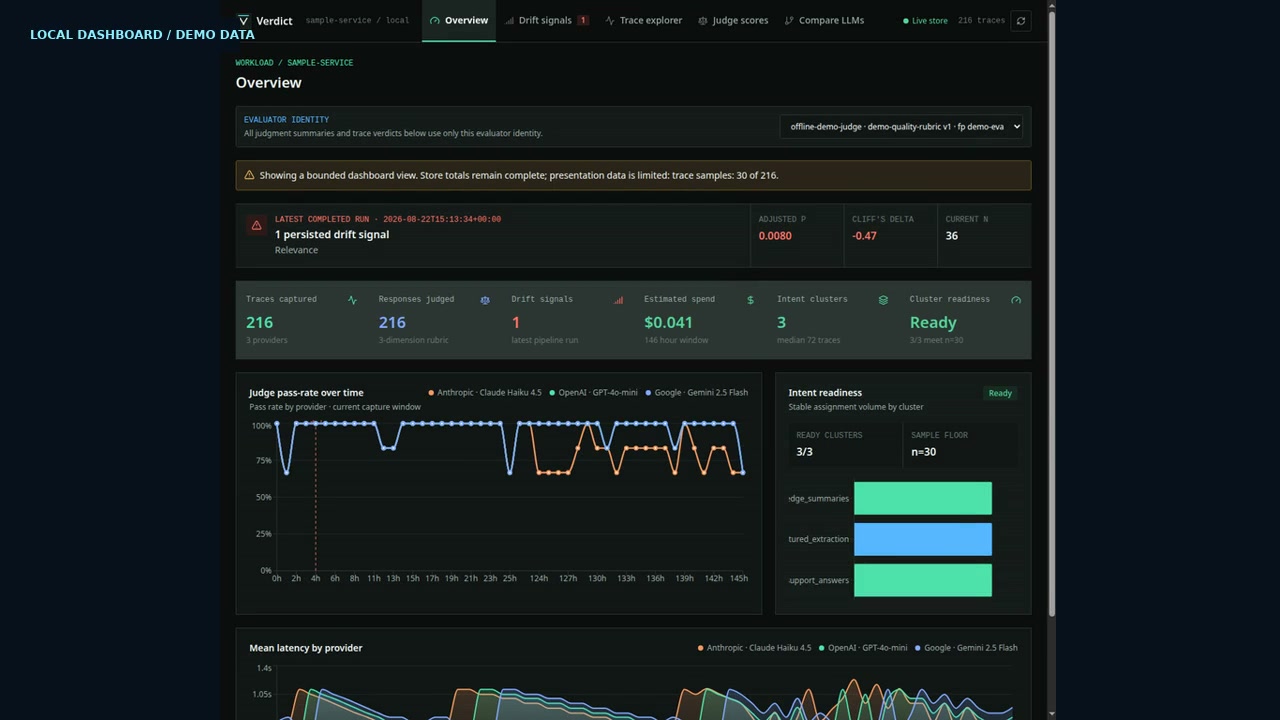
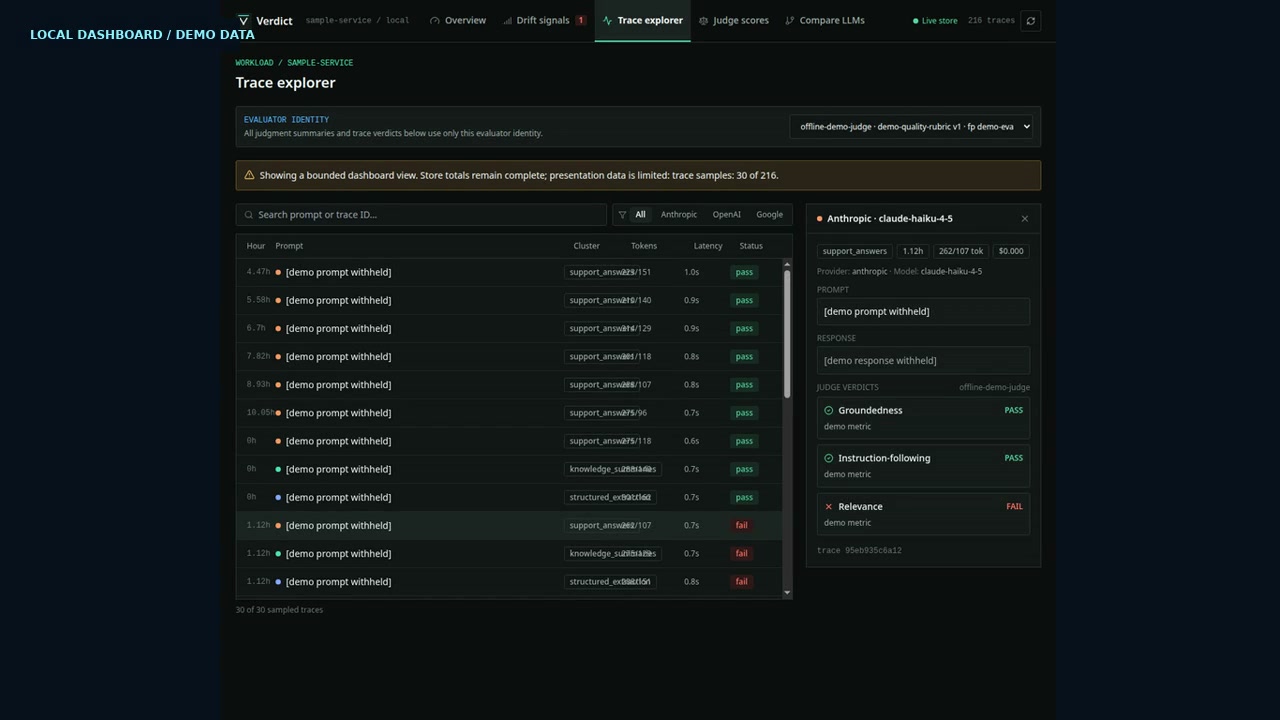
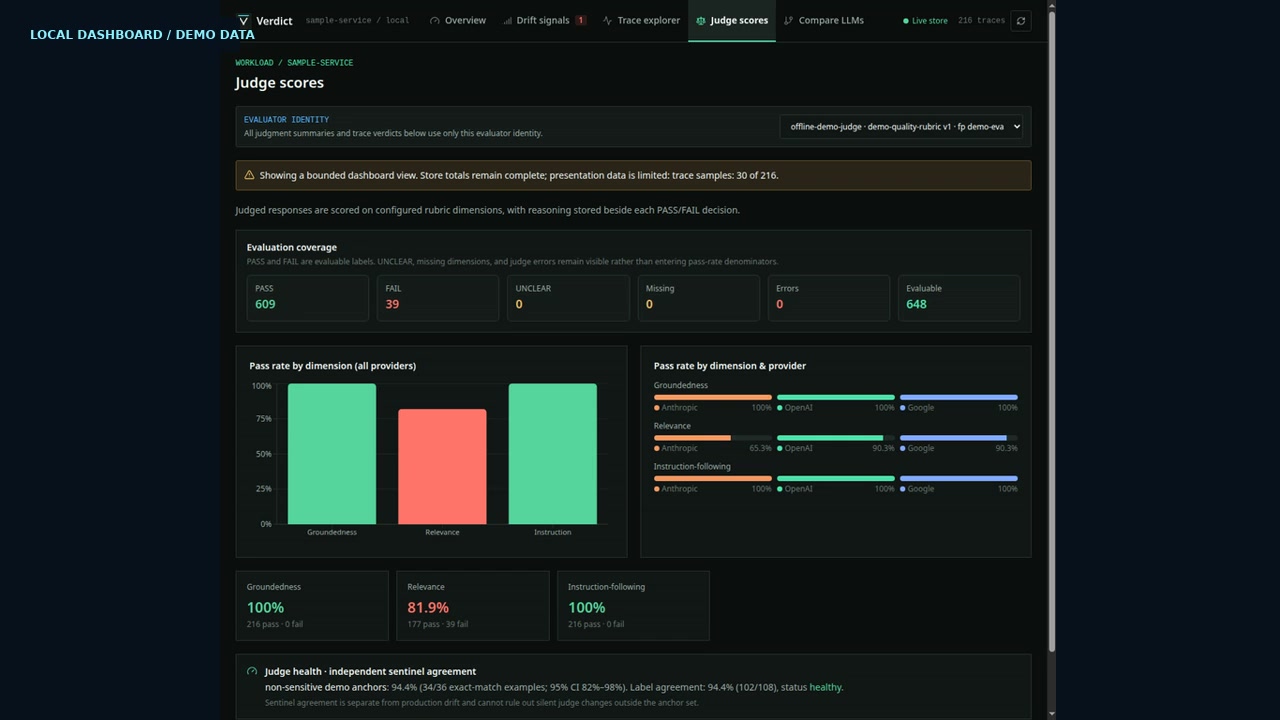
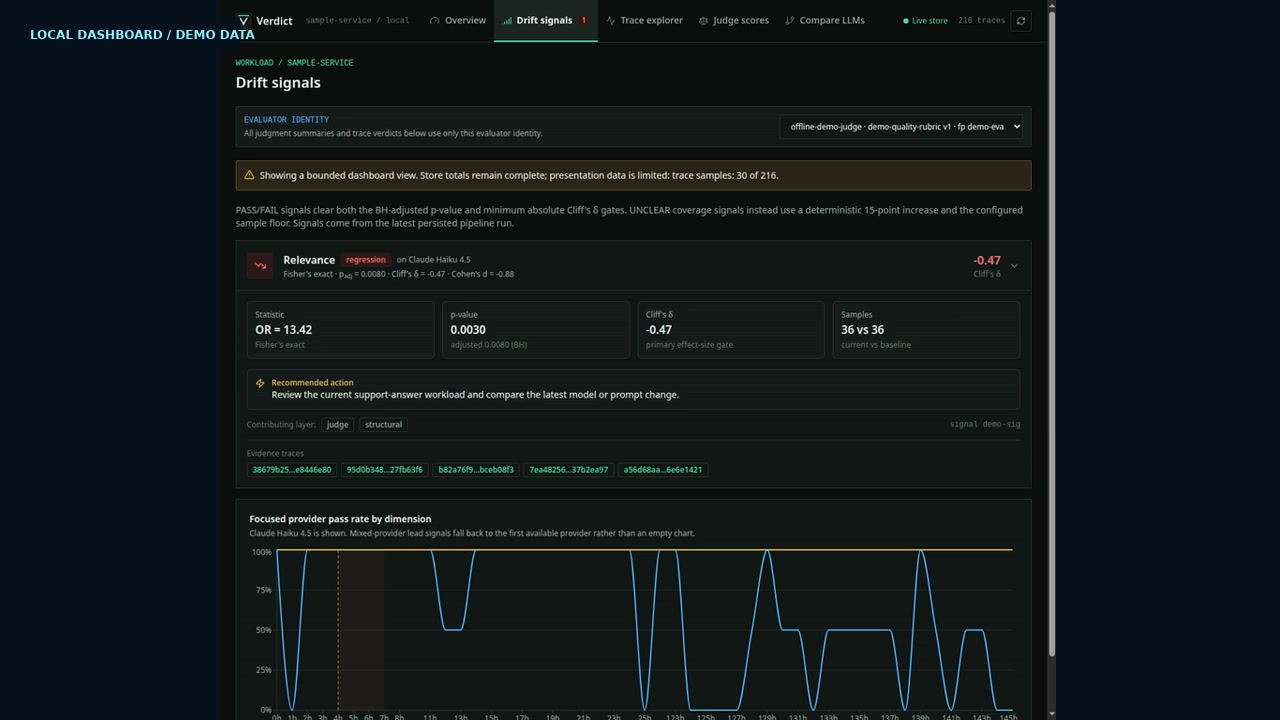
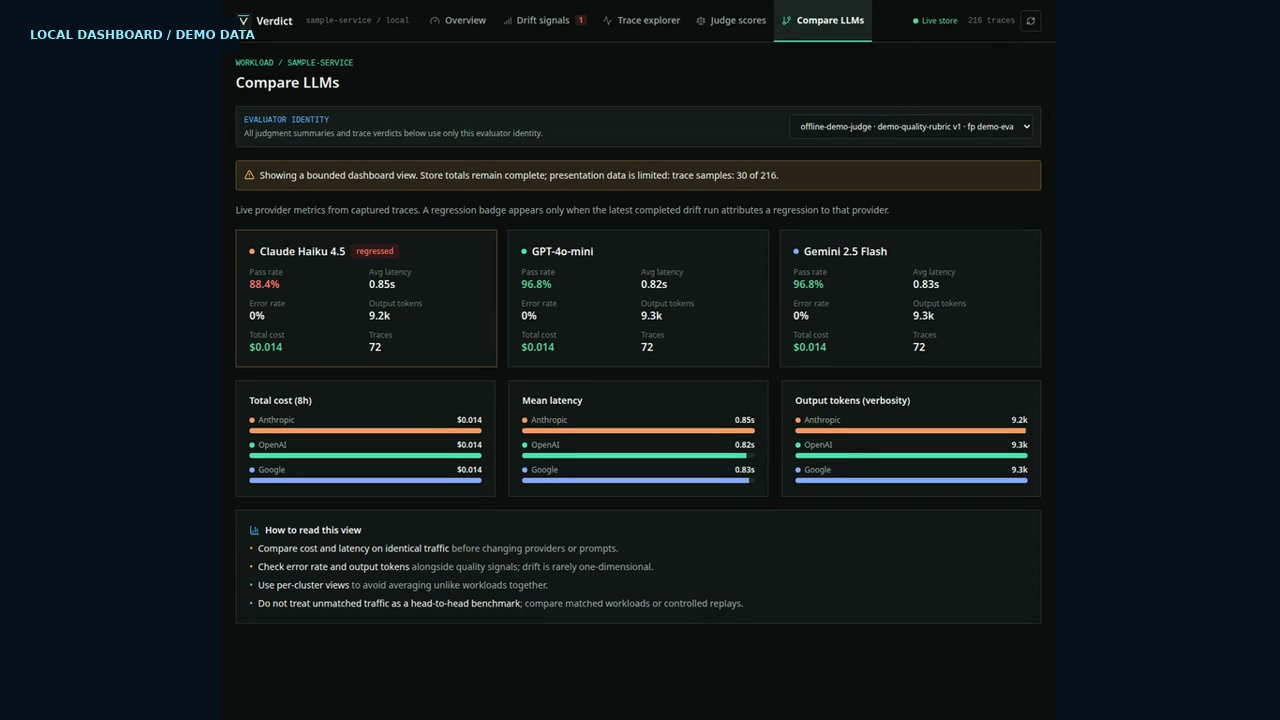
Evidence for LLM calls—not a claim about complete agent success.
What the demo shows
A packaged, read-only dashboard over synthetic traces; workload-specific rubrics; evaluator evidence; and persisted drift details that connect back to trace inspection.
What it does not prove
A real customer regression, calibration for your workload, full agent-run reconstruction, automated root cause, outbound alerting, or general production readiness.
Install locally. Calibrate carefully. Let real traces guide the decision.
Verdict is a public alpha under Apache 2.0. Install the latest compatible packages directly from PyPI; if you need capture, add the maintained integration skill afterward. Neither step requires cloning the repository.